CUSTOM TECHNOLOGY / DATA SYSTEMS
Build the data services
your applications depend on.
We build pipelines, transformations, document retrieval and query services for enterprise applications. Combine Evidence OS sources with your own systems, then add the mappings and calculations your business process needs.
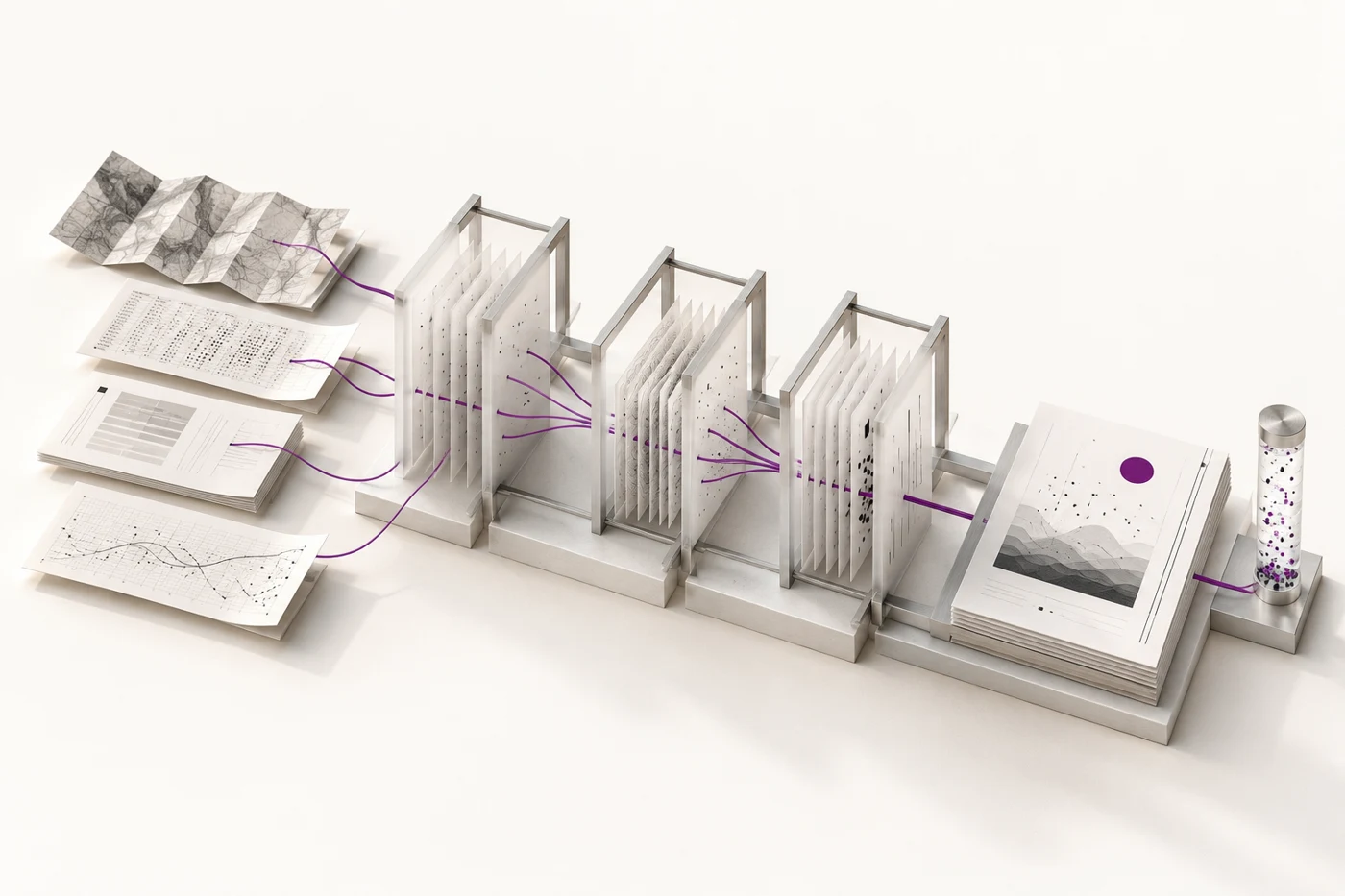
THREE DATA PATHS
Connect tables, documents and APIs.
| Source shape | Engineering work | Result exposed to the application |
|---|---|---|
| Published statistical tables | Preserve source, measure, geography, period and unit; define the refresh path. | Find measures and run queries against selected data. |
| Documents and research | Extract and retain passages, document identity and the applicable workspace context. | Relevant passages and references for a research task. |
| Business-system API | Retrieve eligible records, handle pagination and reconcile the selected business definitions. | Prepared records or calculated measures for the agreed workflow. |
AN EXAMPLE / A REGIONAL COMPARISON
Keep the definition with the number.
A regional comparison needs the indicator, period, unit and geographic code alongside each value. Those fields determine which figures can be compared or joined.
Evidence OS already has tools for finding measures and comparing them. A custom build can add your regional hierarchy, a business-specific calculation or a connection to another source.
RETRIEVAL IS A SEPARATE DESIGN
Bring calculations and documents into the same research.
Use a structured query to calculate a comparison and document retrieval to find the relevant explanation or passage. Each result should link back to its source.
For research that needs both, we design how the table, supporting passages and written explanation fit together. We also define how the underlying sources are refreshed.
DELIVERY
Plan for source changes and failed refreshes.
The build includes source connections, transformations, validation, deployment and operating documentation. It names who maintains each source and explains what the application shows when data is missing or a refresh fails.
See first-party data patterns